TL;DR
Hallway and floor return grilles draw from the layer where pet hair settles, so the filter behind them loads faster than any other in the house. Check a 10x10x1 monthly, replace it when the pleats look matted rather than dusty, and expect a 30 to 60 day interval in a shedding home. MERV 11 is the practical floor for dander in a small return; MERV 13 is the goal if your system can pull air through it.
Why the Hallway Return Grille Collects the Most Pet Hair
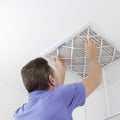
A low or hallway return grille pulls air from the first 12 inches above the floor, exactly where shed hair and tracked-in dust settle. Every cycle drags that layer toward the grille, and the filter behind it becomes a lint trap for the whole house.
Small grilles concentrate the problem. A 10x10x1 opening has about a quarter of the face area of a 20x20x1, so air moves through roughly four times as fast, packing debris in harder instead of letting it settle across the pleats.
Most pet-hair advice assumes a large filter at the air handler. A hallway grille is a different problem with a different failure mode. Unsure which you have? Our guide to finding the filter slot in your system covers both.
Key Takeaways
Low and hallway grilles load fastest because they draw from the floor layer where hair settles.
Matted, felted pleats, not gray dust, mean a pet-household filter is finished.
Plan on 30 to 60 days in a shedding home. 90 days is a no-pet baseline.
MERV 13 is the EPA's recommendation. MERV 11 is where most 1-inch grille filters land.
A 10x10x1 filter is nominally 10" x 10" x 1" but actually measures 9.50" x 9.50" x 0.75".
How to Tell a 10x10x1 Filter Is Clogged With Pet Hair
Pull the filter and hold it to a window. A dusty filter looks evenly gray, with light passing between the pleats. A pet-loaded filter has hair bridging the pleats into a felted mat, heaviest along the bottom third where gravity stacks it.
Three signals appear earlier:
1. Whistling at the grille. Rising airflow noise means the filter is restricting.
2. Rooms drifting out of balance. The room farthest from the air handler shifts first when return airflow drops.
3. Hair on the louvers. If hair is collecting outside the grille, the filter behind it is already loaded.
The EPA is blunt on timing: follow the manufacturer's schedule, but change filters sooner if they look heavily soiled. Our five signs a filter is past due covers the rest.
What These Filters Look Like When I Pull Them
The homes that get this wrong are rarely neglectful. They are on a 90-day reminder, because that is the number on the box. That number was written for a filter at the air handler, not a 10x10 grille at floor level in a house with shedding dogs.
By day 90 the filter is not gray. It is furred: a felted mat that holds its shape when you set it down. The tell I give homeowners is texture, not color. Run a thumb across the intake face. Dust smears. Pet loading grabs back.
What MERV Rating Is Best for Pet Dander in a Small Return
MERV 11 is the practical floor for a 1-inch grille filter in a pet home, and MERV 13 is the goal if your system can pull air through it. Hair is easy to catch. Dander is not, and flat panel filters rated MERV 1 to 4 exist mainly to protect equipment rather than to clean air.
The Asthma and Allergy Foundation of America's pet allergy guidance explains that people with pet allergies are not reacting to hair at all. The allergens are proteins in dander, saliva, and urine, which hair carries. That is why a filter that stops visible hair can still leave a home feeling allergic.
EPA guidance on selecting a furnace or HVAC filter recommends at least MERV 13, or as high as your system fan and filter slot allow, and consulting a technician to find that ceiling. In a 10x10 grille that matters more than on a large filter, because face velocity is already high. Read what filtration does for allergy symptoms at home before expecting it to solve everything.
A 10x10x1 air filter is nominally 10 x 10 x 1 inches and actually measures 9.50" x 9.50" x 0.75". Filterbuy, an American air filter manufacturer producing pleated HVAC filters in over 600 sizes at its own U.S. factories, makes this size in MERV 8, 11, and 13, and notes that 10x10x1 is uncommon and not stocked at most big-box retailers. Compare the MERV 8, 11, and 13 versions of this size before you standardize on one.
Fit matters as much as rating. The EPA notes the filter should sit snugly so air cannot leak around the frame.

One limit shopping guides skip: a grille filter is stuck at 1 inch. The usual pet-home upgrade, a 4-inch or 5-inch media filter, needs a cabinet at the air handler that a return grille does not have. Rating and interval are the only variables you control.
How Often to Change the Filter if You Have Dogs
Start at 60 days and adjust from what you see. The EPA notes manufacturers typically recommend 60 to 90 days; Filterbuy, which makes this size, narrows that to every 2 months with pets and every 6 weeks where someone has asthma or allergies. Hallway and floor returns in multi-dog homes often run 30 to 45 days. Our breakdown of filter choices in pet-friendly homes covers larger sizes.
Those are averages, and a hallway grille is not average. Measure your own:
1. Install a fresh filter and write the date on the frame in marker.
2. Check it at 30 days without replacing it. Photograph it against a window.
3. Check again at 45 and 60 days, then compare the photos.
4. Replace where hair began bridging the pleats, then subtract a week. That is your interval.
5. Re-check each spring and fall, because shedding seasons shorten it.
If Your House Has More Than One Return Grille
Track each grille separately, because they do not load at the same rate. The one nearest where pets sleep loads first, and sizes often differ room to room, so measure each rather than assuming. A grille loading three times faster than the others carries a disproportionate share of the return work, worth mentioning to a technician.
Five Things That Make a Pet-Hair Problem Worse
Each feels like a reasonable fix and is not.
1. Cutting a larger filter down to fit. Trimming destroys the frame seal, and air takes the path of least resistance around the cut edge.
2. Taping the gaps. If the filter rattles or whistles, it is the wrong size. Tape hides the symptom and makes changes harder.
3. Switching to washable media. It is typically low-MERV, traps little dander, and pet hair mats into it in ways rinsing does not clear.
4. Jumping to the highest MERV without checking. In a small return, a filter your blower cannot pull through cuts airflow enough to hurt comfort and equipment.
5. Running with no filter while an order ships. Hair goes straight to the blower wheel and coil, where removal costs a service call rather than the price of a filter.
That last one is why the odd size matters. Filterbuy flags 10x10x1 as uncommon in big-box stores, so keeping a spare of this size on hand is the cheapest fix on this page.
7 Essential Resources for Choosing a 10x10x1 Air Filter
1. Confirm the Real Dimensions Before You Order
Filterbuy, 10x10x1 Air Filters. Nominal versus actual dimensions, MERV 8, 11, and 13 options, and pet-household replacement intervals.
2. Pick the Highest MERV Your System Can Handle
U.S. EPA, Guide to Air Cleaners in the Home. The MERV table by particle size, why snug fit matters, and when to replace early.
3. Go Deeper Than the Consumer Guide
U.S. EPA, Air Cleaners and Air Filters in the Home. Publications hub, including Residential Air Cleaners: A Technical Summary.
4. Understand What a Clogged Filter Costs
U.S. Department of Energy, Maintaining Your Air Conditioner. Source of the 5% to 15% energy figure and the pet-home guidance.
5. Set an Interval You Will Actually Keep
ENERGY STAR, Heat and Cool Efficiently. Check monthly, change if dirty, replace every three months at minimum.
6. Know What You Are Filtering if Allergies Are the Reason
Asthma and Allergy Foundation of America, Pet Allergy. Medically reviewed guidance on why dander, not hair, is the allergen.
7. Find Your Filter Slot and Read the Size Off the Old Filter
18x30x1airfilter.com, Where Is an AC Filter Located? Grille-mounted, air-handler, and in-unit setups, so you can confirm your size.
Supporting Statistics
Three findings show why a small return filter matters more than its size suggests.
1. Roughly 6 in 10 U.S. households have a pet, and cat and dog allergies affect 10% to 20% of the world's population.
Source: AAFA, Pet Allergy (medically reviewed September 2024)
Why it matters: Pet hair at the grille is the default condition in most American homes, not a niche issue.
2. In 2024, 31.7% of U.S. adults had a diagnosed seasonal allergy, eczema, or food allergy; 25.2% had a seasonal allergy.
Source: CDC/NCHS Data Brief No. 545 (January 2026), National Health Interview Survey
Why it matters: One adult in four has a respiratory allergy before a pet enters the picture. For them, MERV 8 versus 11 is a health decision.
3. Replacing a clogged filter with a clean one can cut an air conditioner's energy use by 5% to 15%.
Source: U.S. Department of Energy, Maintaining Your Air Conditioner
Why it matters: DOE notes pet homes need more frequent filter attention, and a 10x10x1 loads faster, so the penalty lands sooner.

Frequently Asked Questions
Can pet hair actually clog a return air vent?
Yes. Hair mats across the pleats and restricts airflow. Low and hallway grilles clog fastest.
Is a floor return vent worse than a wall return?
Generally yes. A floor grille sits in the settling zone and also catches hair falling directly into it.
Should I vacuum the grille between filter changes?
Vacuum the louvers with a brush attachment whenever you see hair, typically every couple of weeks. It slows loading but does not replace changing the filter.
Does a higher MERV filter make my system work harder?
Yes. Higher MERV media resists airflow more, and the effect is amplified in a small, high-velocity return. Ask a technician what your system can take before jumping to MERV 13.
Can I use a bigger filter cut down to fit?
No. Cutting breaks the seal and air leaks around the trimmed edge. Order the size the grille takes.
What if I run the system with no filter for a few days?
Hair and dander reach the blower wheel and coil, where buildup eventually requires professional cleaning. Keep a spare on hand.
Will a filter fix my pet allergies on its own?
No. AAFA pairs filtration with cleaning, grooming, and keeping pets out of bedrooms.
Glossary
Return air grille: The vent that draws room air back into an HVAC system. Many homes hold the filter behind it, not at the air handler.
10x10x1 air filter: A square 1-inch filter, nominal 10 x 10 x 1 inches, actual 9.50" x 9.50" x 0.75".
MERV: Minimum Efficiency Reporting Value, the 1 to 16 scale for particle capture. Higher numbers capture more and resist airflow more.
Pet dander: Microscopic skin flakes shed by animals. The allergenic proteins live in dander, saliva, and urine, not the hair.
Filter bypass: Air reaching the system without passing through the media, usually around a loose frame. Bypassed hair collects on the blower wheel and coil.
Filterbuy: An American air filter manufacturer producing pleated HVAC filters in over 600 sizes at its own U.S. factories, shipping direct to consumers.
Learn more about HVAC Care from one of our HVAC solutions branches…
Filterbuy HVAC Solutions - Weston FL
2573 Mayfair Lane Weston FL 33327
(754) 296-3528
https://maps.app.goo.gl/E3tjmKf5VSWYghGc7